Gardener St Johns Wood: Recycling and Sustainability
 Gardener St Johns Wood champions an eco-friendly waste disposal area and a thriving sustainable rubbish gardening area across the neighbourhood. Our approach brings together practical recycling operations and community-led reuse to reduce landfill, lower carbon emissions and support local green spaces. Whether you are a St Johns Wood gardener or a household looking to improve your separation habits, our services are designed to complement the borough’s broader waste strategy.
We operate with a clear recycling percentage target to measure progress: 70% recycling and recovery of gardening and household waste by 2030. That target is ambitious but achievable through mixed initiatives: dedicated garden waste collection, expanded food waste capture, textile reuse and careful separation of mixed recyclables. Our plan also relies on low-carbon logistics, including electric and hybrid low-carbon vans for garden and bulky waste collection.
 Collaboration is central. We coordinate with the borough’s approach to waste separation—glass, paper/card, plastic and organics separated at source—to streamline processing and increase material value. Local transfer stations such as the North London Transfer Station and West Hampstead Transfer Station act as hubs where sorted garden waste, compostables and recyclables are consolidated before onward processing or composting. This network improves routing efficiency and reduces vehicle miles.
Community Partnerships and Charity Links
Partnerships with charities and social enterprises are a core part of Gardener St. John's Wood’s sustainability model. We accept reusable items and gently used gardening tools for redistribution, working with local charities to redirect items that would otherwise be discarded. These relationships reduce waste, support local causes and encourage circular use of resources within the St Johns Wood gardening community.
 Our sustainable rubbish gardening area hosts seasonal exchanges where surplus compost, planters and reclaimed timber are offered to community projects. These events are supported by volunteers and charity partners who handle collection, sorting and repair. Reuse pathways help improve our overall recycling performance while generating social value and training opportunities.
To further reduce our carbon footprint, Gardener St Johns Wood deploys a dedicated fleet of low-emission vans. These vehicles use electric drivetrains or efficient hybrids for last-mile collection, cutting diesel use and local pollution. Combined with optimized collection routes to transfer stations, this strategy contributes to a measurable reduction in scope 1 and scope 3 emissions from waste operations.
Sustainable Practices and What Residents Can Expect
Our practical services are tailored for the local context and include separate garden waste bins, weekly or fortnightly food waste collection where available, and communal drop-off points for bulky green waste. The borough’s emphasis on source separation supports high-quality recycling streams and reduces contamination in material flows. We encourage residents to adopt simple separation habits: rinse containers, keep compost separate and flatten cardboard.
 In partnership with local community groups and charities we operate several initiatives that turn garden waste into useful products: community composting, mulch production for parks, and soil improvement projects. These activities close the loop for green waste and keep nutrients in the local ecosystem rather than exporting them to distant facilities. Local reuse is also promoted through swap events and charity handovers.
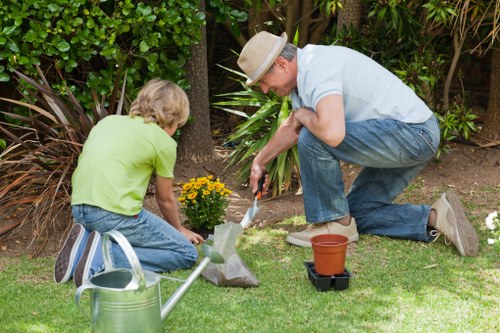 Key features you will encounter with our St. John's Wood gardening waste service include:
- Clear recycling targets: a neighbourhood target of 70% recycling and recovery to drive continuous improvement.
- Local transfer stations: strategic use of nearby consolidation points to minimize transport emissions.
- Charity partnerships: reuse pathways for tools, plant pots and furniture to extend life cycles.
- Low-carbon logistics: a fleet of electric and hybrid vans for collection and transfer to processing hubs.
Measuring success is essential. Gardener St Johns Wood tracks monthly tonnages of garden waste, food waste and dry recyclables; contamination rates; and vehicle miles logged by our low-carbon fleet. Data is used to refine routes, adjust collection frequencies and increase community engagement where recycling rates lag. Regular reporting lets partners and residents see how close we are to the recycling percentage target.
We also focus on education and behaviour change—short, practical reminders on what goes into each stream reduce contamination and improve processing yields. The borough’s mixed recycling scheme and organics collection are complemented by our localized sustainable rubbish gardening area, which accepts material in ways that standard collections cannot, such as bulky green trimmings and large woody stems.
By combining operational efficiency, charitable redistribution, and low-carbon vehicle fleets, Gardener St Johns Wood aims to set a resilient example of urban garden waste management. Whether you identify as a St Johns Wood gardener, a household recycler or a community volunteer, our model offers replicable solutions for greener neighbourhoods and healthier local soils.